

Stop Reactive Hiring. Start Strategic Workforce Planning.
Your workforce is changing — roles, expectations, and care delivery models are evolving faster than ever. The organizations that thrive aren’t the ones reacting later, but the ones planning now.
Workforce planning isn’t just about forecasting headcount. It’s about aligning every hiring decision with your business goals — reducing turnover, maximizing ROI, and ensuring the right people are in the right roles at the right time.
At Talent Connect, we’ve seen a clear trend: organizations that invest in proactive workforce planning see up to 25% lower turnover and significantly reduced vacancy costs within their first year.
Here’s what’s working across the healthcare and senior living organizations we support:
1. Internal Talent Is Your Most Affordable Strategy
Replacing an employee costs 30%–200% of their annual salary. But 70% of employees say they’d stay longer if their organization invested in their career growth. Those numbers tell a simple truth: retention beats replacement — every time.
What this means for you:
- Identify high-potential staff early
- Create clear internal mobility pathways
- Reskill instead of replace when roles shift
When organizations take this approach, the results are tangible. One senior living provider we supported in California cut its turnover rate by 40% in one year after launching a “Grow Within” initiative — pairing emerging leaders with mentors and offering internal certification programs.
The outcome? Lower recruiting costs, shorter onboarding, and a stronger, more cohesive culture.
Pro Tip: Instead of waiting for resignation notices, schedule quarterly “career pathing” conversations. Employees who can visualize a future with your organization are far less likely to look elsewhere.
2. Skills-Based Hiring Increases Qualified Candidate Flow
Organizations removing degree requirements are seeing:
- 2–5x increase in qualified applicants
- More diverse candidate pools
- Faster time-to-fill (from 60+ days down to 21–35 days in healthcare and admin roles)
In a labor market where skills evolve faster than job titles, focusing on capability over credentials helps you tap into a broader, more adaptable talent pool.
For example, instead of requiring “5 years in senior living,” evaluate:
- Communication and empathy skills
- Team leadership experience
- Regulatory familiarity
- Problem-solving ability
You’re hiring for what someone can do, not just where they’ve been.
Case in point: A large outpatient network we advised implemented skills-based screening for care coordinators and increased candidate quality scores by 35%. Those hires stayed longer — and performed better — than those hired under traditional experience filters.
Pro Tip: Review your job descriptions quarterly. If they emphasize credentials over competencies, you may be unintentionally screening out your best future hires.
3. Role Mapping Helps You Avoid “Crisis Hiring”
Crisis hiring happens when turnover outpaces planning. By analyzing which roles are:
✔ expanding
✔ consolidating
✔ at risk
✔ or becoming hybrid
—you can anticipate change before it disrupts operations.
Role mapping gives you clarity on:
- Which positions to recruit for now
- Which to develop through internal training
- Where to reallocate staffing budgets for greatest impact
Most organizations skip this step — and end up paying the price later through agency labor or burnout-driven turnover.
One example: A 200-bed skilled nursing facility identified that their admissions coordinator role was evolving into a community liaison hybrid. By redefining the role and upskilling their existing staff before turnover occurred, they saved over $75,000 in recruiting and overtime costs in one year.
Pro Tip: Pair your HR data with input from department heads. Data shows you trends, but leaders show you operational realities — both are essential to plan effectively.
4. Talent Connect’s Workforce Planning Support
We partner with leadership teams to design workforce strategies that reduce chaos and cost. Here’s how we do it:
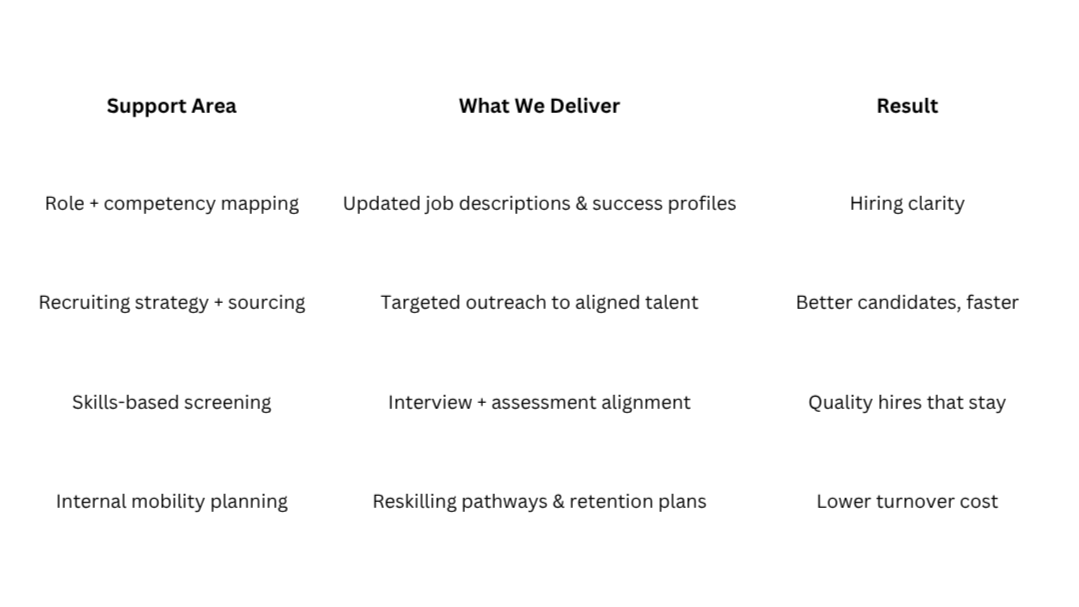
These strategies help organizations move from reactive hiring to proactive workforce growth. Instead of scrambling when vacancies arise, you’ll already know which roles are next in line — and which internal team members are ready to step up.
Pro Tip: Build workforce planning into your quarterly business reviews. When HR sits at the same table as Finance and Operations, hiring decisions start supporting broader organizational strategy — not just filling seats.
Why This Matters Now
The cost of not planning is higher than ever:
- Extended vacancies lead to burnout and lost revenue
- Poor hiring decisions create cultural and financial ripple effects
- Competitors who plan ahead will attract top performers before you even post your opening
With talent shortages expected to continue through 2025 — especially in healthcare, administration, and senior care — proactive workforce planning isn’t optional. It’s your competitive edge.
Organizations that plan strategically:
- Build leadership pipelines instead of leadership gaps
- Control labor costs more effectively
- Strengthen employee engagement through clarity and communication
Strategic workforce planning turns hiring into a growth strategy — not just a process.
It’s time to strengthen your workforce strategy — not just for today’s hiring goals, but for long-term impact.
This year, let’s focus on reducing turnover, filling critical roles faster, and setting your organization up for sustainable success.